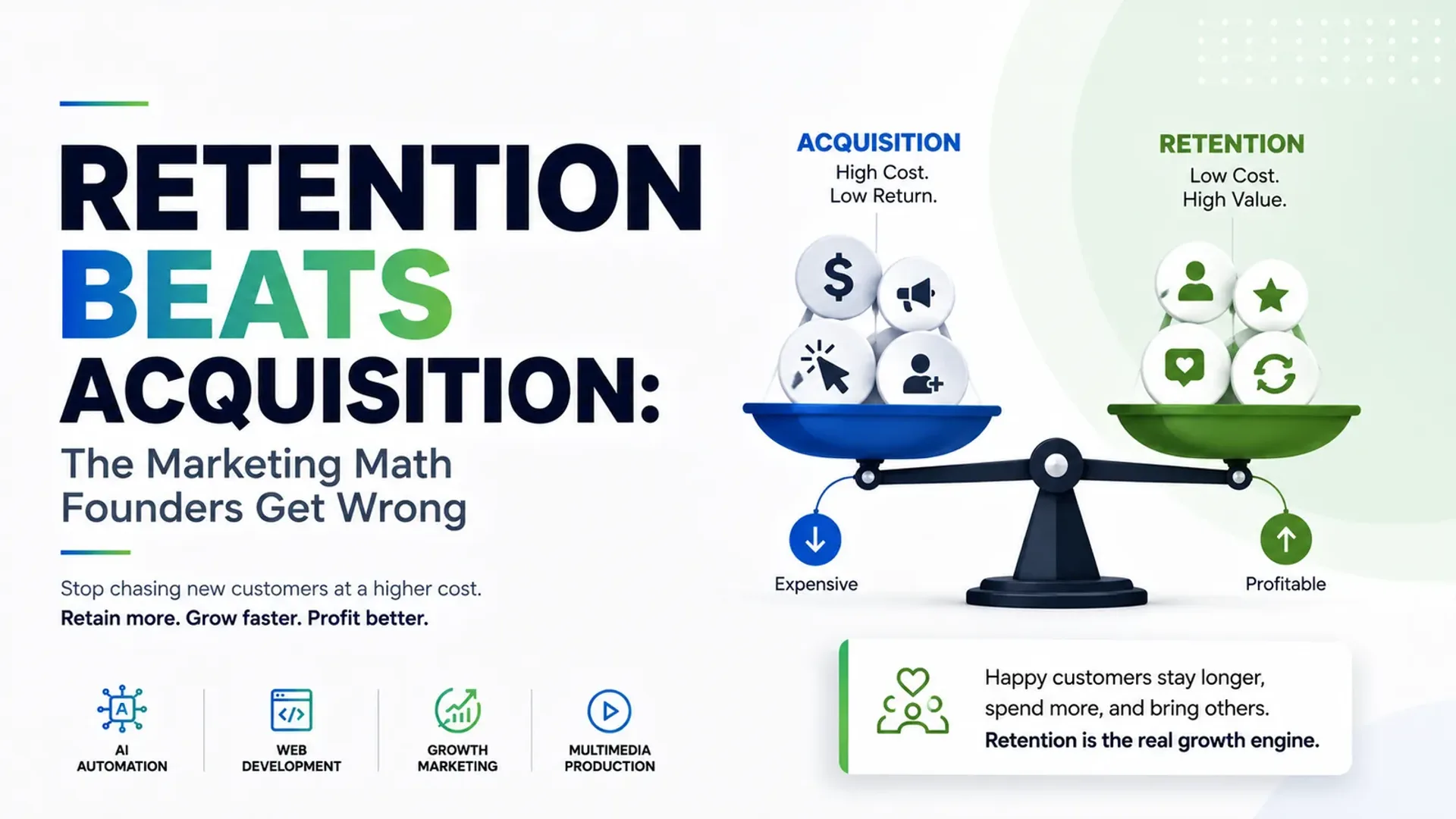
Ask almost any founder about growth and they will talk about ads, leads, and new customers. Ask them about the customers they already have, and you will often get a shrug and a vague 'yeah, we should do more with them.' That instinct — all eyes on the top of the funnel, none on the bottom — is one of the most expensive mistakes in business, because the math on retention is overwhelming, and most companies get it exactly backwards.
This is not a soft argument about being nice to customers. It is a hard argument about profit. When you actually run the numbers, the case for shifting attention from chasing new customers to keeping existing ones becomes almost impossible to ignore.
The numbers that change the game
Winning a brand-new customer typically costs several times more than keeping one you already have. And the value does not stop at the saving: existing customers buy more often, spend more per order as trust builds, and refer others at a rate cold prospects never will. Studies across industries have shown that even a small lift in retention can lift profit dramatically — because you are compounding revenue on customers you have already paid to acquire, instead of forever refilling a leaky bucket.
Why acquisition gets all the attention anyway
New customers feel like growth; keeping old ones feels like maintenance. Acquisition is visible, exciting, and easy to celebrate — a new logo, a spike in signups, a dashboard going up and to the right. Retention is quiet and unglamorous. So budgets, dashboards, and energy skew relentlessly to the top of the funnel while the bottom silently drips. The businesses that win are simply the ones that refuse to ignore the customers they already earned.
The leaky bucket problem
Picture your business as a bucket. Acquisition pours water in at the top; churn leaks it out the bottom. If the bottom is leaking badly, pouring in more water at the top is exhausting and expensive — you run faster just to stay level. Fixing the leak first means every drop of acquisition effort finally accumulates instead of draining away. Retention is not the opposite of growth; it is what makes growth compound.
How to plug the leak
Start with onboarding — the first experience largely decides whether a customer stays, so make those first days effortless and rewarding. Stay in genuine contact with real value (email is unbeaten here, as we argued in our case for it as the highest-ROI channel). Ask for feedback and, crucially, act on it visibly. And reward loyalty in ways that feel personal rather than transactional. None of it is flashy, but it compounds quietly and relentlessly.
It all rests on a product and experience worth returning to. A confusing, slow, or frustrating experience is a silent churn machine — which is why turning traffic into loyal customers depends on the fundamentals in the CRO guide every business owner needs, and on the speed and clarity covered in how website speed affects sales.
Frequently Asked Questions
Is retention really cheaper than acquisition?
Yes — winning a new customer typically costs several times more than keeping an existing one. Existing customers also spend more and refer others, so retention compounds returns in a way acquisition alone never can.
Should I stop spending on acquisition?
No — you need both. The point is to stop over-investing in acquisition while neglecting retention. Plug the leak first, and then every dollar you pour into winning new customers actually accumulates instead of draining away.
What's the single best retention lever?
A strong onboarding and first experience — it sets whether customers stick around. After that, consistent, genuinely useful communication keeps you top of mind and turns one-time buyers into repeat ones.
How do I know if I have a retention problem?
Track repeat-purchase rate and churn, not just new signups. If you're constantly acquiring but revenue isn't compounding, your bucket is leaking — the growth is draining out the bottom faster than you can pour it in.
A confusing or slow website quietly costs you the repeat business that makes retention pay. See how yours holds up with a free website audit.
Tap the button and Google will show you our new articles more often — in Search, Top Stories and AI Overviews.
Have a project in mind?
Let’s turn it into an intelligent product. Book a free 30-minute discovery call.
Start your project →