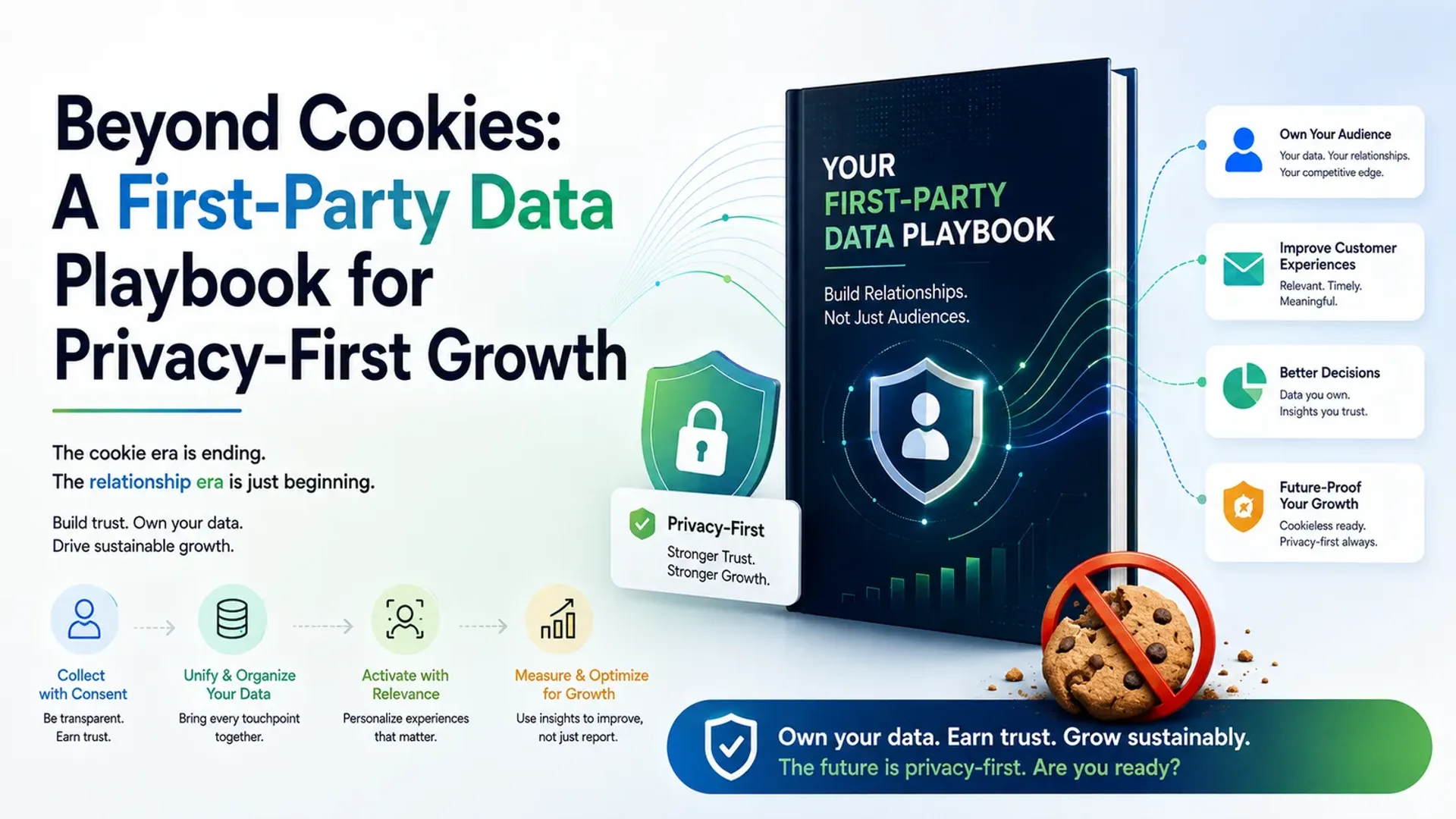
For a long time, digital marketing ran on borrowed data — third-party cookies and trackers that followed people around the internet so you could target them later. That era is ending, squeezed from both sides by tightening browser rules and a public that is genuinely tired of being surveilled. Marketers who built their entire strategy on that borrowed data are discovering the ground is no longer solid.
The good news is that what replaces it is better. First-party data — information your customers share with you directly, willingly — is more accurate, more durable and impossible for a competitor to buy. Building it is the growth advantage of the next decade.
Why first-party data wins
Borrowed data was always a compromise: broad, leaky and increasingly unreliable. Data given to you directly is the opposite. Someone who hands you their email, tells you their goal or engages with your content is showing real intent, not an inferred guess. You own the relationship, you are not at the mercy of a platform's rules, and the trust implied by that exchange is itself valuable.
How to build it
- Trade genuine value for information. People share willingly when they get something worthwhile in return — a useful tool, a real insight, an experience that improves once they tell you what they need.
- Make the exchange honest. Ask for what you will actually use, say why, and deliver on the promise. Every clean interaction builds permission for the next.
- Own your channels. Email lists, communities and accounts are assets you control, unlike rented audiences on platforms that can change the rules overnight.
- Use the data to serve, not just to sell. The point is a better experience — relevant content, smarter recommendations — which in turn earns more data.
Trust is the whole strategy
First-party data and privacy are not in tension — done right, they reinforce each other. Customers share more with brands that treat their information with respect, which is exactly what makes personalisation sustainable. It is the foundation that lets small brands deliver the kind of tailored experiences that used to require a giant's budget.
Frequently Asked Questions
Is first-party data only for big companies?
Quite the opposite. Small brands often build richer direct relationships because they are closer to their customers. A simple email list you nurture well can outperform a sophisticated tracking stack you do not.
What is the first step if I have none?
Create one honest value exchange — a genuinely useful resource, tool or offer — that invites people to share an email and one thing about their goal. Deliver real value, and grow from there.
Want help building a first-party data engine that respects your customers and compounds over time? Let's talk.
Tap the button and Google will show you our new articles more often — in Search, Top Stories and AI Overviews.
Have a project in mind?
Let’s turn it into an intelligent product. Book a free 30-minute discovery call.
Start your project →