Why Your Fast Site Still Feels Slow: Winning Core Web Vitals in the INP Era
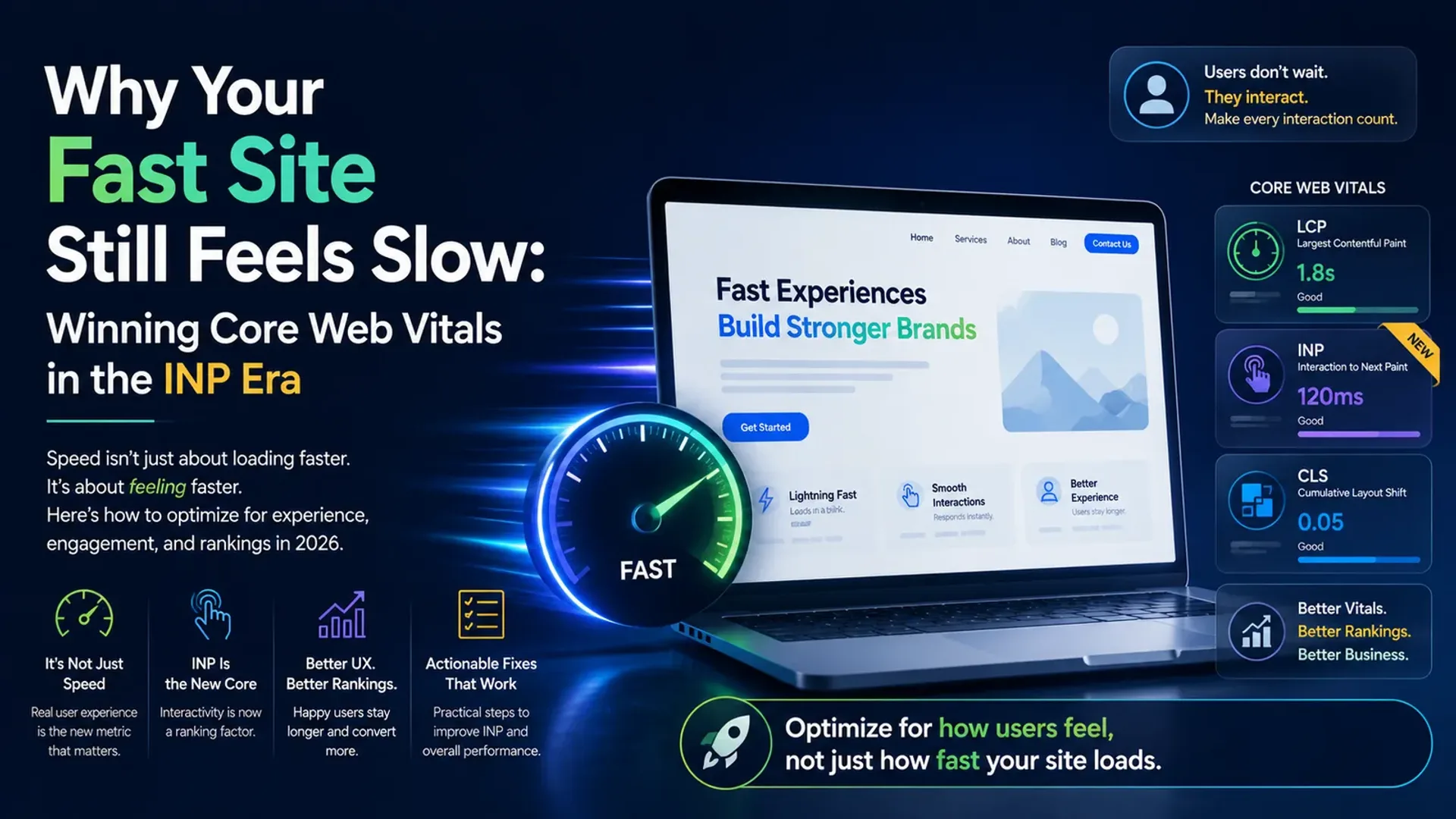
You have probably had this experience: a website loads in a flash, but the moment you tap a button or open a menu, it hesitates. It technically loaded fast, yet it feels slow. For years the web obsessed over load speed and largely ignored this second, more frustrating kind of slowness — the lag between doing something and seeing the site respond. That blind spot is now closed.
Interaction to Next Paint, or INP, measures exactly that responsiveness, and it is part of how Google judges page experience. A site can pass every old speed test and still fail its users the instant they try to interact.
Load speed is only half the story
Traditional metrics reward how quickly a page paints its first pixels. But a real visit is not passive — people click, type, filter and expand. If the page freezes while it processes those actions, the experience feels broken no matter how fast it first appeared. INP captures the slowness people actually feel, which is why it matters more than a flattering load-time score.
What usually causes poor interactivity
- Too much JavaScript. Heavy scripts tie up the browser so it cannot respond to input promptly. Most sites ship far more than they use.
- Everything running at once. Loading and executing non-essential code up front competes with the interactions users actually make.
- Third-party bloat. Analytics, chat widgets, embeds and tag managers each add weight and can quietly wreck responsiveness.
- Doing work on the main thread. Expensive operations that block the browser turn a single tap into a visible stall.
How to make it feel instant
The fix is discipline, not magic: ship less code, defer what is not immediately needed, audit third-party scripts ruthlessly, and keep the browser free to respond. A site that reacts the instant a user acts feels trustworthy and effortless — and that felt quality quietly reinforces the trust buyers extend to you.
Frequently Asked Questions
How do I know if my site has an INP problem?
Google's own tools report Core Web Vitals including INP using real-world data from actual visitors. If the numbers are poor, the lag your users feel is real — trust the field data over how snappy it feels on your own fast device.
Is this only about SEO?
No. Search ranking is the nudge, but the real prize is user experience. A responsive site keeps people engaged and converting; a laggy one loses them regardless of where it ranks.
If your site feels sluggish and you are not sure why, book a free discovery call and we will diagnose it with you.
Tap the button and Google will show you our new articles more often — in Search, Top Stories and AI Overviews.
Have a project in mind?
Let’s turn it into an intelligent product. Book a free 30-minute discovery call.
Start your project →