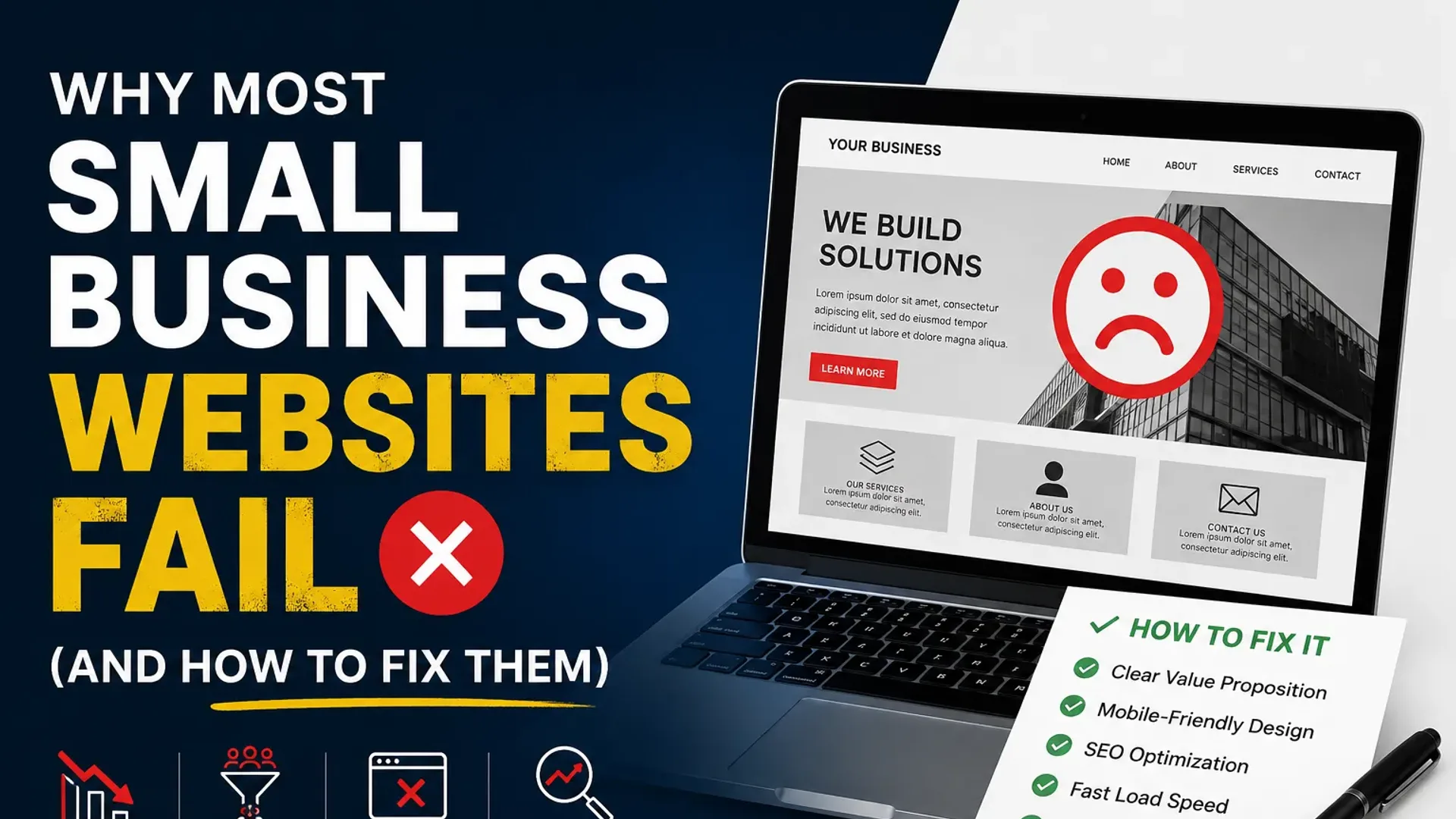
Most small business owners launch a website, breathe a sigh of relief, and then wait for the leads to roll in. Months later, the inbox is still quiet. The site looks fine. People visit it. But nothing happens.
If that sounds familiar, you are not alone, and your website is not broken in some mysterious way. It is failing for reasons that are common, predictable, and fixable. This guide walks through why most small business websites underperform and what you can do about each problem today.
The Real Reason Your Website Isn't Generating Leads
A website is not a brochure. It is a salesperson that works while you sleep. The trouble is that most small business sites are built like brochures, with a logo, a few pretty pictures, and a paragraph about the company history. That setup looks professional, but it does not sell.
A site that generates leads does three things well. It tells visitors exactly what you offer, it builds enough trust to make them comfortable, and it makes the next step obvious. When any one of these is missing, leads dry up.
Visitors Cannot Tell What You Do
People decide whether to stay on a page in a few seconds. If your homepage opens with a vague slogan instead of a clear statement of what you sell and who you sell it to, most visitors leave before they scroll.
The fix is simple. Put a plain sentence at the top of your homepage that says what you do, who it is for, and what result you deliver. Save the clever wordplay for later.
There Is No Reason to Trust You
Strangers do not hand over their money or contact details to a business they just found. They need proof that you are real and capable. A site with no reviews, no client logos, no photos of real people, and no clear contact information feels risky.
Adding a few genuine testimonials, a real address, and a human face goes a long way. Trust is what turns a curious visitor into a lead.
Website Mistakes Small Businesses Make
Beyond the big-picture problems, there are specific, repeated mistakes that quietly kill performance. Here are the ones that show up most often.
Slow Loading Speed
A site that takes more than three seconds to load loses a large share of its visitors before they ever see your offer. Heavy images, bloated themes, and cheap hosting are usually to blame.
You can fix most speed issues by compressing your images, removing plugins you do not use, and choosing faster hosting. Speed is not a luxury. It is the floor.
A Site That Breaks on Phones
More than half of all web traffic comes from phones. If your site was designed for a desktop and looks cramped or scrambled on a small screen, you are turning away the majority of your audience.
Test your own site on your phone right now. If you have to pinch and zoom to read anything or tap a button, your visitors do too, and they will not put up with it.
No Clear Call to Action
Many small business sites tell you everything about the company and then leave you stranded. There is no obvious button to click, no form to fill, no number to call.
Every page should point the visitor toward one clear next step. Whether that is booking a call, requesting a quote, or filling a short form, the action should be visible and repeated.
Confusing Navigation
When a menu has fifteen items and three of them say almost the same thing, visitors get lost. A confused visitor does not become a customer. They leave.
Keep your menu short and logical. Group related pages, drop the ones nobody visits, and make sure someone can find your core offer in one click.
Writing About Yourself Instead of the Customer
A common pattern is a website that talks endlessly about the business. We were founded in this year. We are passionate about that. We have a great team. None of this answers the only question the visitor is asking, which is whether you can solve their problem.
Rewrite your key pages so they speak to the visitor's situation first. Lead with their problem and your solution, then add the company background as supporting detail.
How to Run a Quick Business Website Audit Yourself
You do not need expensive software to spot most of these issues. A focused self-review will surface the biggest problems in under an hour.
Check the First Impression
Open your homepage as if you were a stranger. Within five seconds, can you tell what the business does, who it serves, and what to do next? If not, that is your first fix.
Test the Speed
Use a free speed-testing tool to measure your load time on both desktop and mobile. Anything slower than three seconds needs attention. Note the largest files dragging the page down.
Walk Through Every Path
Pretend you are a customer ready to buy. Can you complete that journey without confusion? Try to book, buy, or contact, and write down every point where you hesitate or get stuck.
Review on Mobile
Go through your whole site on your phone. Look for text that is too small, buttons that are hard to tap, and images that overflow the screen. Mobile problems cost you the most traffic, so they deserve the most attention.
Look at Your Calls to Action
Visit each main page and ask what you want the visitor to do there. If the answer is not obvious from the page itself, the call to action is missing or buried.
Turning a Failing Website Into a Working One
The encouraging part is that none of these problems require a full rebuild from scratch. Most failing small business websites are one clear message, one fast-loading page, and one obvious call to action away from working.
Start with the fixes that touch the most visitors. Clarify your homepage message first, because every visitor sees it. Fix mobile and speed next, since they affect more than half your traffic. Then sharpen your calls to action so the visitors you keep actually convert.
Work through the list in that order and you will usually see results before you finish. A website that was sitting silent can start producing real inquiries with a handful of focused changes rather than a costly overhaul.
Get a Free Website Audit
If you would rather have an expert eye spot exactly what is holding your site back, a professional audit will pinpoint the highest-impact fixes for your specific situation. We offer a free website audit that reviews your messaging, speed, mobile experience, and conversion paths, then hands you a prioritized list of what to fix first.
Request your free website audit today and find out why your site isn't generating leads, and exactly how to change that.
Tap the button and Google will show you our new articles more often — in Search, Top Stories and AI Overviews.
Have a project in mind?
Let’s turn it into an intelligent product. Book a free 30-minute discovery call.
Start your project →