Social Media Marketing for Business Owners: From Followers to Paying Customers
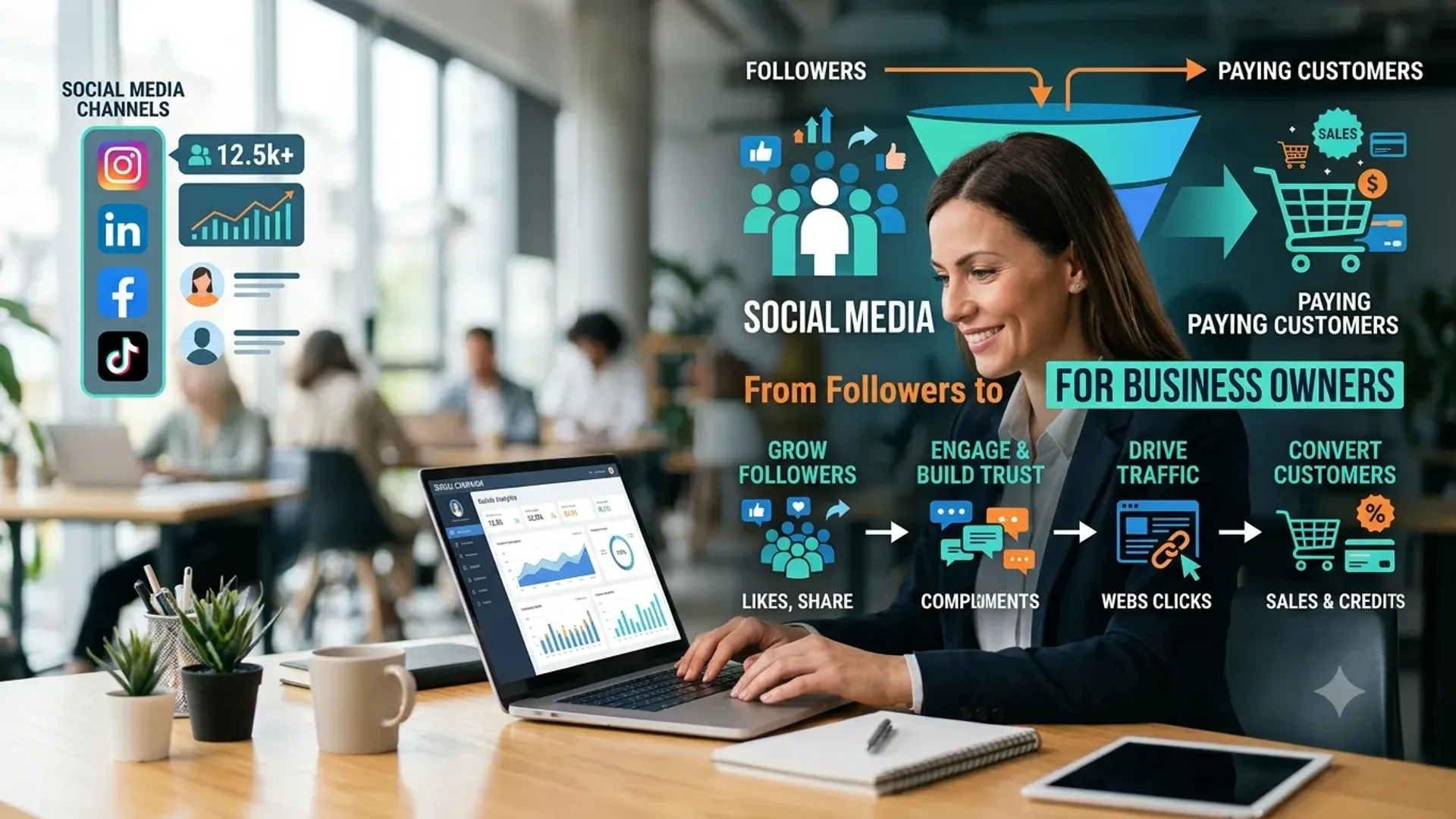
Picture a restaurant owner — let's call her Priya. She's posting on Instagram every single day. Reels of the kitchen, carousel posts of the daily specials, the occasional "Tag a friend who loves pasta" giveaway. Her posts are getting hundreds of likes. A few go small-time viral in her city. Her follower count has climbed past 8,000.
Her tables are still half-empty on weeknights.
Priya is not failing at social media. She's succeeding at the wrong game. She's optimising for applause when she needs to optimise for reservations. The two things are related — but they are not the same thing, and confusing them is the single most common mistake business owners make with social media marketing for small business.
This post is about the gap between attention and revenue, and how to close it. We'll cover which platforms actually matter for your specific buyers, what kinds of content move people from curious scrollers to paying customers, and what the realistic path from a post to an enquiry actually looks like. No hype about going viral. No promises about overnight growth. Just what works, and why.
The Vanity Metrics Trap (and Why It's So Easy to Fall Into)
Likes, follows, impressions, reach — these are called vanity metrics for a reason. They feel good. They're visible. They're easy to measure. And they are almost completely disconnected from revenue, especially for service businesses and local businesses where the buying decision involves trust, not just impulse.
A furniture brand in Sydney once hired a social media manager whose primary KPI was follower growth. In 12 months, the page went from 3,000 to 22,000 followers. Engagement was strong. The owner was thrilled — until she looked at how many of those followers had ever enquired. Fewer than forty. The account had attracted interior design enthusiasts from around the world who loved looking at beautiful furniture but were never going to buy a $4,000 dining table from a business on the other side of the planet.
The problem wasn't social media. The problem was measuring the wrong thing.
Followers are not customers. They are potential customers — and only if you give them a clear, easy path to become one.
The path from post to paying customer has roughly five steps: they see your post, they visit your profile, they click through to your website or send a DM, they enquire, and they buy. Most social media strategies put enormous effort into step one and then leave steps two through five completely to chance. That's where the money leaks out.
Pick One or Two Platforms — Your Buyers' Platforms, Not All of Them
There is a school of thought that says you should be everywhere: Instagram, Facebook, LinkedIn, TikTok, Pinterest, YouTube Shorts, X (formerly Twitter), Threads, and whatever new platform launched last Tuesday. The idea is that more presence equals more opportunity.
In practice, spreading yourself thin across six platforms means producing mediocre content on all of them and burning out in about three months. It also means you never get good enough at any single platform to understand how its algorithm actually works or what its audience specifically responds to.
The far smarter move is to identify where your buyers already spend time, and concentrate there.
A rough guide to platform audiences
- LinkedIn: B2B services, professional consulting, recruitment, SaaS, anything sold to decision-makers at companies. If your buyer has a job title, LinkedIn is probably the right place.
- Instagram: Consumer lifestyle, food, fashion, beauty, interiors, fitness, local hospitality, creative services. Strong for visual businesses with a clear aesthetic.
- Facebook: Local services (trades, healthcare, community-based businesses), older demographics, community groups, events. Still significant, often underestimated.
- TikTok / YouTube Shorts: Consumer products, entertainment, educational content, younger demographics. High reach potential but time-intensive to do well.
- Pinterest: Home, interiors, weddings, food, fashion, DIY. Exceptional for driving website traffic if your product photographs well.
If you sell IT services to SMEs, you should be on LinkedIn, probably not TikTok. If you run a wedding photography studio, Instagram and Pinterest will outperform Facebook by a wide margin. If you're a plumber, a well-managed Facebook page and Google Business profile will do more for you than any of the above.
Pick one primary platform. Add a second only when you have a real system on the first. The one that matters is the one where your actual buyers are — not the one where the most people are.
Content Pillars That Actually Sell
If every post is a promotion, people stop paying attention. If no post ever mentions what you sell, people enjoy your content but never connect it to a purchase. The solution is a content mix built around a few defined pillars — recurring themes that serve different purposes in the journey from stranger to customer.
Here's the mix that works consistently for service and product businesses:
Proof
Results. Case studies. Before-and-after. Client testimonials (video if possible). Real numbers where you can share them. This is the most commercially powerful content you can post, and most businesses underuse it because they feel self-conscious about "showing off."
Get over it. Proof is not bragging — it's evidence that you can actually do what you say. A three-sentence client quote with a photo of the finished project does more selling than a week's worth of tips posts.
Education
Genuinely useful information that helps your audience — not a surface-level "did you know?" but the kind of thing that makes someone think "I didn't realise that, I should look into it more." Education builds authority and trust. It's also the category most likely to be saved and shared, which expands your reach without you spending anything extra.
A financial planning firm posting about the actual tax implications of selling a business will attract far more qualified prospects than one posting about "the importance of saving for retirement."
Behind the Scenes
People buy from people. Behind-the-scenes content — the team at work, a day in the process, what actually goes into delivering your service — humanises your brand and builds the kind of familiarity that makes someone comfortable picking up the phone. This content rarely goes viral, but it builds trust quietly over time.
Offers and Direct Calls to Action
You are allowed to ask for the sale. In fact, you need to. A direct post — "We have two project slots open in July, here's what's involved and how to apply" — will generate enquiries that 50 educational posts won't. The trick is timing: offers land better when you've already built credibility with the other three pillars. Cold audiences hate being sold to immediately. Warm audiences who already trust you respond well to a clear, honest offer.
A rough ratio that works for most businesses: 60% education and behind-the-scenes, 25% proof, 15% direct offers. Adjust based on what your audience responds to — your analytics will tell you.
Consistency Beats Volume Every Time
Three posts a week, every week, for a year, will always outperform ten posts a week for six weeks followed by a two-month gap. This is not a guess — it's the result of how every major social media algorithm works. Consistency signals that you're a reliable creator, which gets you shown to more people over time. Gaps signal the opposite.
The mistake most business owners make is planning content in bursts of ambition. They sit down on a Sunday, fire out content ideas for the whole month, then real life intervenes and the plan collapses by week two. The fix is to design a system, not a calendar.
A system looks like: one hour on Monday to film two short videos, one hour on Wednesday to write captions and schedule, a template for each content pillar so you're never starting from a blank page. Done. That's a realistic social media practice for a business owner who has other things to do.
You don't need to post every day. You need to post every week, without fail, for long enough that it compounds into something.
Six months of consistent, targeted posting will typically produce measurable results for a local service business. Twelve to eighteen months for a newer brand in a competitive space. If someone promises you results in thirty days, they're selling you something.
Turning Attention Into Leads: The Mechanics
This is where most social media strategies fall apart. A business owner builds an audience, posts good content, and then has no system for capturing the interest it generates. The post creates a moment of attention. If there's nowhere for that attention to go, it evaporates.
Here's what the conversion infrastructure actually looks like:
Profile optimisation
Your bio is a landing page. It should say exactly what you do, who you do it for, and what someone should do next. "Helping Sydney small businesses get more leads through smart digital marketing | Book a free strategy call 👇" is infinitely more useful than "Marketing agency | We love what we do ✨." Every character in your bio should be doing a job.
Link in bio
One clear link to the most relevant page on your website — your contact page, a service page, a booking page. Not your homepage, which makes people hunt. Not a Linktree with twelve options, which creates decision paralysis. One destination. If you run promotions or different campaigns, update it when relevant.
If your website isn't converting visitors who arrive from social, the problem might be on the site itself — a topic we've covered in detail here.
Clear CTAs in every post
Every post should have a next step. "Comment below," "DM me the word AUDIT," "Click the link in bio to book," "Save this for later." Not every CTA needs to be commercial — but there should always be one, because people follow instructions when given them and drift when they aren't.
DMs as a sales channel
Direct messages are often where the real conversations happen, especially on Instagram and LinkedIn. If someone comments positively on a post, send a short, genuine DM. If someone views your story repeatedly, they're interested — reach out without being creepy about it. A simple "Thanks for engaging with our content — happy to answer any questions if you have them" opens doors. The conversion rate on a warm DM outreach is considerably higher than cold email.
Retargeting
If you're running paid social alongside your organic content, retargeting is where the return on investment concentrates. Someone who watched 50% of your video ad or visited your website is a far warmer prospect than a cold audience. A well-set-up retargeting campaign on Facebook or Instagram can turn social media interest into actual enquiries at a fraction of the cost of cold traffic. This is where the right technical setup matters — pixel installation, audience segmentation, exclusion lists to avoid showing ads to existing customers.
Honest About Effort and Timelines
Social media marketing for small business is not free marketing. It's just a different cost structure: instead of media spend, you're spending time. A realistic organic social media programme for a small business costs somewhere between five and ten hours a week when you include strategy, content creation, community management, and performance review. That's significant. It's a proper job function.
The businesses that get the best results from social are either the ones willing to genuinely invest that time themselves, or the ones who hand it to a specialist and stay out of the way. The worst outcomes come from the in-between: outsourcing it but insisting on approving every post, or doing it yourself but treating it as an afterthought squeezed into spare minutes.
And on timelines: organic social is a slow burn. You are building an asset — an audience that knows you, trusts you, and will eventually buy from you or refer someone who will. That asset takes time to build. The businesses that give up after three months are the ones that never see the payoff from months one and two. The ones that stick with it for a year often find that social becomes their most reliable source of inbound enquiries, often at a lower cost per lead than paid search.
It's also worth checking whether your broader digital marketing efforts are aligned — social works significantly better when it connects to a well-optimised website and a clear email follow-up sequence.
Actionable Takeaways
- Audit your current metrics: Are you measuring followers and likes, or enquiries and revenue? Identify one conversion metric to track alongside engagement.
- Pick your platform: Write down where your actual buyers spend time. Choose one primary platform and commit to it for at least six months.
- Define your four content pillars: Proof, education, behind-the-scenes, and offers. Plan content under each one rather than posting whatever comes to mind.
- Rewrite your bio: Make sure it says what you do, who for, and what to do next. Add a clear link to a relevant page.
- Audit your post CTAs: Go back through your last ten posts. How many had a clear next step? Add one to every post going forward.
- Set a realistic schedule: Three posts a week is better than seven posts one week and none the next. Block time in your calendar for content creation and treat it like a client meeting.
- Open the DMs: Respond to every comment, engage with people who engage with you, and follow up warm leads with a short, genuine message.
- Check your website: Use a free website audit to ensure that the traffic you drive from social actually converts when it lands.
Frequently Asked Questions
How many times a week should I post on social media?
For most small businesses, three to five times per week on your primary platform is the sweet spot — frequent enough to stay visible without sacrificing quality. Consistency matters more than volume. Three strong posts a week, every week, will outperform daily posting that burns you out and drops off after a month.
How long does it take to get results from social media marketing?
For organic social, expect three to six months before you see meaningful lead generation, and six to twelve months before it becomes a reliable channel. Paid social can generate enquiries faster — sometimes within a few weeks — but only if your targeting, creative, and landing page are all working together. Anyone promising significant results in under thirty days is almost certainly overselling.
Should I be on every social media platform?
No. Being mediocre on six platforms is far less effective than being excellent on one or two. The platforms that matter are the ones your actual buyers use. Start by asking your best current customers where they spend time online, and go there first.
What kind of content gets the most engagement?
That varies by platform and industry, but proof-based content (testimonials, case studies, results) and genuine behind-the-scenes content tend to drive the most meaningful engagement — comments, saves, and DMs rather than passive likes. Educational content is the most likely to be shared and reach new audiences. Direct offers tend to get lower engagement but higher conversion from the people who do engage.
Is organic social media enough, or do I need paid ads?
For most businesses, organic social alone is a slow route to lead generation. Paid social — even a small budget of $10–$20 per day — can significantly accelerate results, especially when used for retargeting people who already know your brand. The two work best together: organic builds trust, paid amplifies reach and drives specific actions.
How do I turn followers into customers without being pushy or spammy?
The answer is sequence. Build trust first through education, proof, and behind-the-scenes content, then introduce offers to an audience that already understands your value. Make every CTA clear and specific rather than vague. And remember that one honest, direct post about what you offer and who it's for will always outperform a hard-sell approach — people can smell the difference.
The Bottom Line
Social media marketing for small business works. But it works as a system — a deliberate path from post to profile to website to enquiry — not as a random act of content. The businesses that see real commercial results from social are the ones that pick the right platform for their buyers, post content with a purpose, and make it genuinely easy for interested people to take the next step.
Priya the restaurant owner, from the beginning of this post, wasn't doing social media wrong. She was doing it without a commercial layer. Add a link in bio that goes directly to the reservation page. Post one client story a week. Run a monthly "book this week, get a complimentary dessert" offer post. Follow up every comment with a genuine response. Do that consistently for six months and the results will be different.
If you're putting time and energy into social media but not seeing it translate into enquiries, the issue is usually structural rather than creative. It's worth having someone who understands both the content side and the conversion side look at what you're doing before you keep posting into the void.
Alternate offers a free content and social media audit for business owners who want an honest assessment of what's working, what isn't, and where the quick wins are. No obligation, no pitch — just a straight answer. Get in touch here, or if you'd rather see what a full social media strategy looks like, explore what we offer.
Tap the button and Google will show you our new articles more often — in Search, Top Stories and AI Overviews.
Have a project in mind?
Let’s turn it into an intelligent product. Book a free 30-minute discovery call.
Start your project →